
If you’re just starting your programming journey, you might have heard the word algorithm and thought, “That sounds complicated!” But here’s the good news: with the right beginner algorithm guides, you can learn algorithms step by step in a simple and practical way. Algorithms are simply step-by-step instructions to solve problems, and they are the backbone of every computer program, app, and game you use every day. By understanding algorithms, you’ll learn not just to code, but to think like a problem solver.
In this detailed guide, we’ll cover what algorithms are, why they matter, the most important algorithms for beginners, step-by-step learning strategies, and tips to practice efficiently.
What is an Algorithm?
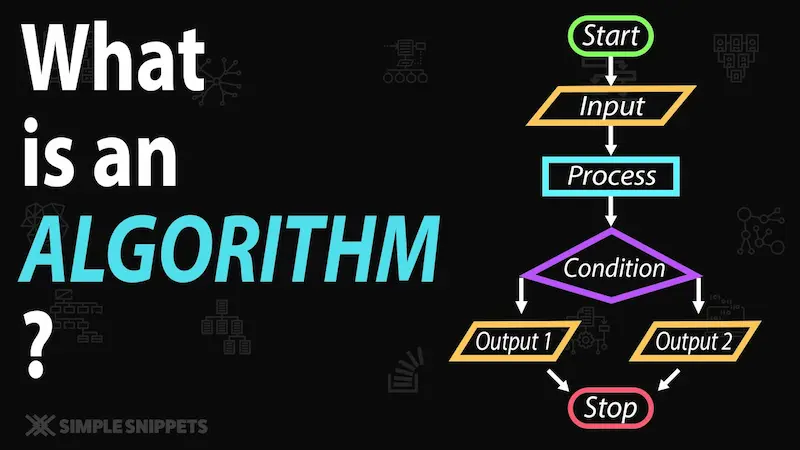
An algorithm is a well-defined set of instructions to solve a problem or accomplish a task. Think of it as a recipe in a cookbook: if you follow it correctly, you get the intended result. Computers follow algorithms to perform tasks like sorting your emails, suggesting videos on streaming platforms, or calculating routes on maps.
Real-Life Examples of Algorithms:
- Making Tea: Boil water → Add tea leaves → Wait → Pour → Serve.
- Finding a Friend in a Crowd: Look left → Look right → Move closer → Repeat.
- Sorting Books on a Shelf: Compare two books → Place in order → Repeat until sorted.
Algorithms aren’t just for computers—they are everywhere, but computers execute them far faster and with precision.
Why Are Algorithms Important?
Learning algorithms might seem optional when you’re starting to code, but here’s why they are essential:
- Efficiency: Algorithms help your programs run faster and use less memory. For instance, a good sorting algorithm can sort thousands of numbers in seconds, whereas a poor one may take minutes.
- Problem-Solving Skills: Understanding algorithms develops your logical thinking and problem-solving skills, which are valuable beyond programming.
- Career Growth: If you plan to appear for coding interviews or work in tech, mastering algorithms is crucial. Many companies evaluate candidates based on algorithmic problem-solving.
- Foundation for Advanced Topics: Algorithms form the base for advanced programming concepts like data structures, machine learning, artificial intelligence, and game development.
In short, algorithms make you a better coder and a better thinker.
Types of Algorithms for Beginners
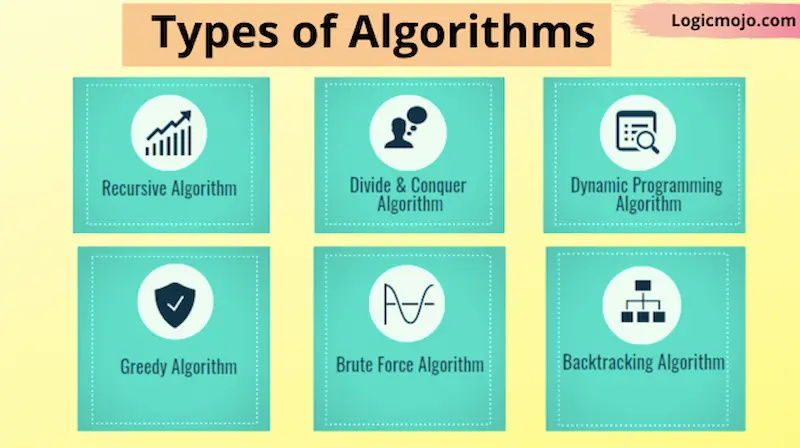
To start with, you don’t need to learn every algorithm in the world. Focus on these core types:
1. Sorting Algorithms
Sorting means arranging data in a specific order, like numbers from smallest to largest or names alphabetically.
- Bubble Sort: Compare adjacent elements and swap them if they’re in the wrong order. Repeat until sorted.
- Selection Sort: Find the smallest element and place it in the correct position, then move to the next smallest.
- Insertion Sort: Build a sorted list one element at a time by inserting each new element in the correct position.
Why Sorting Matters: Sorted data is easier to search and process.
2. Searching Algorithms
Searching algorithms help you find data efficiently.
- Linear Search: Check each element one by one until you find your target. Easy, but slow for large datasets.
- Binary Search: Works on sorted data. Check the middle element, decide which half to continue searching in, and repeat. Much faster than linear search.
Tip for Beginners: Start with linear search to understand the logic, then move to binary search.
3. Recursion
Recursion occurs when a function calls itself to solve a smaller version of the problem. Think of it as a series of Russian dolls: each function solves a smaller part until it reaches the simplest version, known as the base case.
Example: Calculating factorial of a number:
factorial(5) = 5 * factorial(4)
factorial(4) = 4 * factorial(3)
…
factorial(1) = 1 (base case)
Recursion is powerful but can be tricky for beginners—start with simple examples.
4. Basic Graph and Tree Algorithms
Graphs and trees represent networks and hierarchical data.
- Graph Traversal: Visit every node in a network, like finding all friends in a social media network. Common techniques: Depth-First Search (DFS) and Breadth-First Search (BFS).
- Tree Traversal: Visit nodes in a hierarchical structure, like files in folders. Common methods: Pre-order, In-order, and Post-order traversal.
These algorithms help you understand relationships between objects and data.
You may also like to read this:
Common Algorithm Examples: Beginner-Friendly Guide
Top Algorithm Problem Solving Tips For Programmers
Sorting And Searching Algorithms Explained For Beginners
Step By Step Algorithm Tutorials: Learn Algorithms Easily
Step-by-Step Guide to Learning Algorithms
Here’s a roadmap for beginners to effectively learn algorithms:
Step 1: Learn Programming Basics
Before diving into algorithms, you should understand variables, loops, and conditional statements. Languages like Python are beginner-friendly.
Step 2: Start Small
Begin with simple algorithms like linear search and bubble sort. Understand how each step works logically.
Step 3: Visualize the Process
Draw diagrams, use flowcharts, or online animation tools like VisuAlgo. Visualization makes understanding much easier.
Step 4: Practice Problems
Practice is the key. Start with easy problems on platforms like:
- LeetCode
- HackerRank
- Codewars
- GeeksforGeeks
Start with easy problems, then gradually move to medium and hard.
Step 5: Learn Complexity Analysis
Algorithms aren’t just about getting the correct output—they must also be efficient. Learn about:
- Time Complexity: How fast an algorithm runs (Big O notation).
- Space Complexity: How much memory it uses.
Even basic knowledge helps you choose the right algorithm for a task.
Tips for Beginners
- Don’t memorize algorithms blindly—understand the logic.
- Use pseudo-code to write algorithms in plain language first.
- Collaborate with friends or participate in coding communities. Teaching others reinforces your understanding.
- Take one topic at a time; avoid overwhelming yourself.
- Practice consistently. Small daily problems are better than cramming.
FAQs About Beginner Algorithm Guides
Q1: Do I need advanced math to learn algorithms?
A: Not at all. Most beginner algorithms require basic arithmetic and logical thinking.
Q2: Which programming language is best for beginners?
A: Python is highly recommended because of its readability and simple syntax.
Q3: How long does it take to understand basic algorithms?
A: With consistent practice, you can understand beginner algorithms in 3–4 weeks.
Q4: Can I learn algorithms without coding experience?
A: Yes! Start by understanding the logic and writing pseudo-code. Coding practice will follow.
Q5: Why is algorithm practice important for interviews?
A: Many tech interviews focus on problem-solving using algorithms, making it a core skill for developers.
Conclusion
Learning algorithms might seem challenging at first, but with the right beginner algorithm guides, anyone can master them. Start small, visualize every step, practice daily, and gradually move to advanced topics. Algorithms are not just for programmers—they sharpen your logical thinking and problem-solving skills, useful in every aspect of life.
By following this guide, you’ll be able to tackle problems confidently, write efficient code, and lay a strong foundation for your coding career. Remember, every great programmer started with the basics—algorithms are your stepping stone to success!