Are you curious about how computers can “think” and make decisions like humans? Welcome to this beginner machine learning guide! If you’re completely new to the world of machine learning (ML) and artificial intelligence (AI), don’t worry. This guide is designed to explain everything from the basics to the first practical steps you can take, in a friendly and easy-to-understand way. By the end, you’ll have a clear understanding of what ML is, why it’s important, and how to start your first project.
What is Machine Learning?

Machine learning is a subset of artificial intelligence where computers learn from data instead of being explicitly programmed. Imagine teaching a child to recognize animals. You don’t write instructions for every type of animal; instead, you show examples: “This is a cat,” “This is a dog,” and so on. The child then starts recognizing patterns. Machine learning works similarly: algorithms analyze data, learn patterns, and make predictions or decisions automatically.
In short: ML is all about using data to make intelligent decisions.
Why Learn Machine Learning?
Machine learning is everywhere in our daily lives. Here’s why learning it is valuable:
- Personalized Experiences: Recommendation systems on Netflix, YouTube, and Spotify use ML to suggest content you’ll love.
- Virtual Assistants: Siri, Alexa, and Google Assistant rely on ML to understand speech and respond intelligently.
- Healthcare Innovations: ML helps predict diseases, diagnose medical images, and even recommend treatments.
- Finance and Security: Banks use ML to detect fraud, approve loans, and offer personalized financial advice.
- Smart Devices: Self-driving cars, smart homes, and robotics all use ML for real-time decisions.
Learning ML not only equips you with a highly in-demand skill but also empowers you to create innovative solutions in nearly any industry.
Key Concepts for Beginners
Before you dive into coding, it’s important to understand some core concepts of machine learning.
1. Types of Machine Learning

There are three main types of machine learning:
a) Supervised Learning
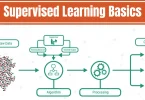
The model learns from labeled data—data that already has the correct answers. For example, if you want a model to predict house prices, your dataset will have historical house features (size, location) and their corresponding prices.
b) Unsupervised Learning
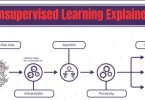
The model works with unlabeled data and tries to find hidden patterns. Example: grouping customers based on their shopping habits to create marketing strategies.
c) Reinforcement Learning
The model learns through trial and error, receiving feedback as rewards or penalties. Example: training a robot to navigate a maze or teaching an AI to play a video game.
2. Data: The Fuel of ML
Data is at the heart of every ML project. Quality data is essential for building effective models.
Key steps include:
- Collecting Data: Gather information from sources like CSV files, APIs, or open datasets.
- Cleaning Data: Handle missing values, remove duplicates, and correct errors.
- Preprocessing Data: Normalize, scale, and transform data to make it suitable for algorithms.
- Splitting Data: Divide your dataset into training and testing sets to evaluate model performance.
3. Algorithms: The Brain of ML
An algorithm is a method your computer uses to learn patterns from data. Here are some beginner-friendly ML algorithms:
- Linear Regression: Predicts continuous values (e.g., house prices).
- Logistic Regression: Predicts binary outcomes (e.g., yes/no, spam/not spam).
- Decision Trees: Models decisions like a flowchart for classification or regression.
- K-Nearest Neighbors (KNN): Classifies data points based on proximity to other points.
- Naive Bayes: Classifies data using probability and works well for text classification.
4. Model Evaluation
Once a model is trained, it’s important to measure its performance. Common evaluation metrics include:
- Accuracy: Percentage of correct predictions.
- Precision: How many predicted positives are actually positive.
- Recall: How many actual positives are correctly predicted.
- F1 Score: Balance between precision and recall, especially useful for imbalanced datasets.
Tools You Can Use
Machine learning can seem intimidating, but modern tools make it accessible—even for beginners.
- Python: The most popular programming language for ML due to its simplicity and extensive libraries.
- Libraries: scikit-learn for ML algorithms, pandas for data handling, numpy for numerical computations, and matplotlib or seaborn for visualization.
- Jupyter Notebook: An interactive environment for writing and testing code, great for experimenting with models.
- Google Colab: Free cloud-based platform for running Python notebooks without installing anything locally.
You may also like to read this:
Common Algorithm Examples: Beginner-Friendly Guide
Top Algorithm Problem Solving Tips For Programmers
Sorting And Searching Algorithms Explained For Beginners
Step By Step Algorithm Tutorials: Learn Algorithms Easily
Algorithm Basics For Beginners: Start Learning Today
Step-by-Step Guide to Build Your First ML Model
Here’s how you can build your first machine learning model from scratch:
- Choose a Problem: Start simple. Example: predicting house prices or classifying emails as spam or not spam.
- Collect Data: Use free datasets from Kaggle, UCI Machine Learning Repository, or open government databases.
- Preprocess Data: Clean and transform your data. Split it into training and testing sets.
- Select an Algorithm: Start with an easy algorithm like Linear Regression or Decision Trees.
- Train the Model: Feed the data into the algorithm and let it learn patterns.
- Evaluate Performance: Use accuracy, precision, or other metrics to measure how well your model performs.
- Tune and Improve: Adjust parameters, try different algorithms, or add more data to improve performance.
- Deploy (Optional): Integrate your model into a small app or web tool to see it in action.
Tips for Beginners
- Start Small: Don’t jump straight into deep learning or advanced projects. Simple problems are better for learning.
- Practice Regularly: The more datasets and models you experiment with, the better you’ll understand ML.
- Leverage Communities: Join forums like Kaggle, Stack Overflow, or Reddit to learn from others.
- Learn Python: It’s essential for most ML projects and widely supported.
- Be Patient: ML is a learning process; mistakes are normal, and practice is key.
Resources to Learn Machine Learning
Here are some beginner-friendly resources:
- Books:
- Hands-On Machine Learning with Scikit-Learn, Keras & TensorFlow by Aurélien Géron
- Python Machine Learning by Sebastian Raschka
- Hands-On Machine Learning with Scikit-Learn, Keras & TensorFlow by Aurélien Géron
- Online Courses:
- Coursera: Machine Learning by Andrew Ng
- Udemy: Machine Learning A-Z
- edX: Introductory ML courses
- Coursera: Machine Learning by Andrew Ng
- Datasets:
- Kaggle
- UCI Machine Learning Repository
- Google Dataset Search
- Kaggle
Common Beginner Mistakes to Avoid
- Using messy or incomplete datasets without cleaning them.
- Trying complex models before mastering basic algorithms.
- Ignoring model evaluation metrics and relying only on accuracy.
- Forgetting to split data into training and testing sets.
Avoiding these mistakes will save you time and frustration as you learn.
Conclusion
This beginner machine learning guide provides everything you need to take your first steps into the world of ML. From understanding the basic concepts to building your first model, you now have a roadmap to follow. Remember, machine learning is all about curiosity, experimentation, and continuous learning. Start small, practice regularly, and you’ll soon be building models that can predict, classify, and automate tasks in exciting ways.
Machine learning is not just a skill—it’s a doorway to the future of technology. By following this guide and exploring the resources mentioned, you’ll be well on your way to becoming confident in ML.
FAQs
1. What is machine learning in simple terms?
Machine learning is a type of artificial intelligence where computers learn from data to make predictions or decisions without being explicitly programmed. Think of it like teaching a computer to recognize patterns from examples.
2. Do I need to know programming to start learning machine learning?
Yes, having a basic understanding of programming, especially Python, is very helpful. Python is widely used in ML because it’s beginner-friendly and has powerful libraries like scikit-learn, pandas, and numpy.
3. What is the difference between supervised and unsupervised learning?
Supervised Learning: Uses labeled data (data with answers) to train models. Example: predicting house prices.
Unsupervised Learning: Uses unlabeled data to find patterns or groups. Example: customer segmentation in marketing.
4. How much math do I need to learn machine learning?
Some math is helpful, especially:
Linear Algebra: For understanding data structures and transformations.
Probability & Statistics: For model evaluation and predictions.
Calculus (basic): Useful for understanding optimization in algorithms like gradient descent.
For beginners, you can start coding ML models without deep math knowledge and learn it gradually.
5. What are some beginner-friendly machine learning algorithms?
Linear Regression
Logistic Regression
Decision Trees
K-Nearest Neighbors (KNN)
Naive Bayes
These algorithms are simple to understand and implement, making them perfect for beginners.