
Meta Description: Explore the top AI-powered video and creative platforms in 2026. Compare MagicHour.ai with leading tools for editing, animation, face swapping, and automated production workflows.
As of June 2026, AI-powered creative tools have shifted from experimental utilities into full production environments. Video creators, marketers, startup founders, and digital agencies are no longer searching for single-purpose editors. They want systems that can generate visuals, automate repetitive editing tasks, create motion assets, improve audio workflows, and shorten production cycles from days to minutes.
That shift is exactly why platforms like MagicHour.ai are gaining attention.
After spending weeks testing modern AI creative suites across real-world projects — including social campaigns, YouTube content, product demos, short-form ads, and animated promotional assets — one trend became obvious: the strongest tools are those that reduce workflow fragmentation.
Most creators today lose time moving files between applications. One tool edits images. Another handles animation. A third performs voice synchronization. A fourth exports motion graphics. That fragmented process slows production and increases complexity.
MagicHour.ai approaches the problem differently.
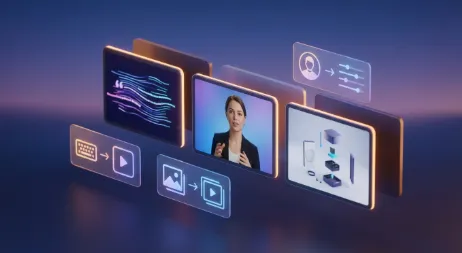
Instead of functioning as a narrow editing utility, it operates more like a unified creative workspace. The platform combines AI image editing, video transformation, talking-photo technology, animation tools, and automated production features into one interface. For creators managing fast-moving production schedules, this matters far more than the number of features alone.
The modern content market rewards speed, flexibility, and consistency. Brands are publishing more short-form content than ever before. Social platforms prioritize frequent uploads. Marketing teams are expected to produce campaign variations quickly. Independent creators are competing with production studios.
In that environment, AI tools are no longer optional productivity boosts. They are infrastructure.
One reason MagicHour.ai stands out is its ability to support both static and motion-based workflows without requiring advanced editing expertise. That balance between accessibility and output quality is difficult to achieve.
The platform also competes strongly in categories like the best AI face swap tool market, where realism, speed, and ease of use matter more than feature overload.
Below is a breakdown of the leading AI creative platforms shaping 2026, including where each tool performs best and where limitations still exist.
Best AI Creative Platforms at a Glance
| Tool | Best For | Core Features | Platform | Free Plan | Strength |
| MagicHour.ai | All-in-one AI creation | Editing, animation, video transformation | Web | Yes | Unified workflow |
| Runway ML | Experimental creators | AI video & motion tools | Web | Limited | Advanced creativity |
| Adobe Firefly | Professional teams | Commercial image generation | Web/Desktop | Limited | Enterprise integration |
| Canva AI | Marketing teams | Templates & quick edits | Web/Mobile | Yes | Simplicity |
| Pika Labs | AI animation | Text-to-video | Web/Discord | Limited | Motion generation |
| Synthesia | Business presentations | AI avatars | Web | Demo only | Corporate content |
| Kapwing AI | Social content | AI editing suite | Web | Yes | Team collaboration |
MagicHour.ai (Best Overall Creative Platform)
MagicHour.ai is built for creators who need production speed without sacrificing quality. The platform merges image editing, AI generation, animation, and video transformation into a single streamlined workflow.
Instead of manually adjusting layers, masks, or timelines, users can upload content and direct changes through prompts. That approach dramatically reduces editing time while keeping the workflow accessible to non-technical creators.
One major advantage is workflow consolidation. During testing, projects that normally required three or four separate tools could often be completed entirely inside MagicHour.ai.
The platform also handles advanced creative outputs, including animated portraits, stylized transformations, talking photos, and automated visual effects. For creators producing social-first content, that flexibility saves significant time.
It also performs extremely well as the best AI face swap tool for creators looking for fast, realistic transformations without complex manual editing.
Pros
- Fast prompt-based editing
- Unified image and video workflow
- Clean interface with short onboarding time
- Excellent automation features
- Strong support for social content creation
- Consistent output quality
Cons
- Internet connection required
- Credit-based usage for larger workloads
- Advanced manual control is lighter than desktop software
Evaluation
After testing MagicHour.ai across portrait edits, ad creatives, product marketing assets, and short-form social campaigns, the biggest strength was efficiency.
Tasks that traditionally require 30–60 minutes inside professional editing software can often be completed in seconds using prompt workflows.
The platform also reduces creative fatigue. Instead of handling repetitive production tasks manually, creators can focus on concepts, storytelling, and iteration.
Another important feature is its ability to sync audio to video workflows more efficiently than many lightweight AI competitors. That capability matters for creators building talking-avatar videos, marketing explainers, and social media clips.
Pricing
- Free plan available
- Premium subscriptions for expanded usage and export quality
Runway ML (Best for Experimental Creators)
Runway ML continues to attract filmmakers, designers, and creative technologists who want access to advanced AI video experimentation tools.
The platform focuses heavily on generative motion content, cinematic effects, and AI-assisted editing.
Pros
- Advanced motion tools
- Frequent feature updates
- Strong generative video capabilities
- Excellent for experimentation
Cons
- Steeper learning curve
- Less beginner-friendly
- Output consistency varies
Evaluation
Runway ML performs best when users want creative freedom rather than simplified workflows. During testing, it delivered impressive cinematic sequences and experimental visual styles.
However, it requires patience and technical curiosity. For production teams prioritizing speed and repeatability, it may feel less efficient than MagicHour.ai.
Pricing
- Limited free tier
- Paid plans for higher generation limits
Adobe Firefly (Best for Enterprise Professionals)
Adobe Firefly benefits from Adobe’s massive ecosystem integration. It connects naturally with Photoshop, Illustrator, and Premiere workflows.
The platform focuses heavily on commercially safe generative content for professional teams.
Pros
- High-quality image generation
- Strong enterprise reliability
- Commercial-safe outputs
- Deep Adobe integration
Cons
- Requires Adobe ecosystem familiarity
- Subscription costs increase quickly
- Slower workflow for rapid iteration
Evaluation
Adobe Firefly excels in structured professional environments where brand consistency matters more than rapid experimentation.
For agencies already operating inside Adobe Creative Cloud, the transition feels natural. Independent creators, however, may find lighter AI-first tools faster and more flexible.
Pricing
- Free credits available
- Included in Adobe subscriptions
Canva AI (Best for Marketing Teams)
Canva AI focuses on accessibility and simplicity. It remains one of the easiest platforms for marketers and small businesses to produce visual content quickly.
Pros
- Extremely easy to use
- Large template ecosystem
- Fast onboarding
- Good collaboration tools
Cons
- Limited advanced editing
- Less customization depth
- AI outputs can feel templated
Evaluation
Canva AI works best for fast-moving marketing teams producing presentations, ads, and social graphics.
It is efficient, approachable, and reliable, but it lacks the deeper creative flexibility offered by more specialized AI platforms.
Pricing
- Free plan available
- Pro subscription unlocks advanced features
Pika Labs (Best for AI Animation)
Pika Labs focuses primarily on AI-generated animation and motion creation.
The platform has become popular among creators producing stylized short-form video content.
Pros
- Strong animation capabilities
- Good text-to-video generation
- Creative visual styles
- Rapid innovation
Cons
- Limited editing depth
- Output unpredictability
- Smaller workflow ecosystem
Evaluation
Pika Labs is exciting for creators experimenting with animated storytelling and stylized visuals.
It performs best as a specialized motion-generation tool rather than a complete production environment.
Pricing
- Free access available
- Premium plans for advanced rendering
Synthesia (Best for Corporate Videos)
Synthesia specializes in AI avatar videos designed for business communication.
The platform is commonly used for internal training, onboarding, educational content, and multilingual corporate messaging.
Pros
- Realistic AI avatars
- Multi-language support
- Professional presentation quality
- Efficient business workflows
Cons
- Limited creative flexibility
- Less suited for entertainment content
- Higher pricing for teams
Evaluation
Synthesia performs well for structured business communication where consistency matters more than creative experimentation.
It is less suitable for creators producing entertainment or highly stylized social content.
Pricing
- Demo access available
- Subscription-based pricing
Kapwing AI (Best Collaborative Editing Tool)
Kapwing combines browser-based editing with a growing set of AI-assisted production tools.
It emphasizes collaboration and accessibility for remote creative teams.
Pros
- Browser-based workflow
- Strong collaboration tools
- Simple editing experience
- AI subtitle generation
Cons
- Limited advanced cinematic tools
- Slower rendering on complex projects
- Feature depth varies
Evaluation
Kapwing works especially well for teams producing collaborative social content.
Its simplicity is an advantage for distributed teams, though advanced creators may eventually outgrow the platform.
Pricing
- Free version available
- Premium plans for exports and AI features
How I Evaluated These Platforms
I tested every platform using realistic production scenarios instead of isolated demos.
The testing process included:
- Social media ad creation
- AI-assisted portrait editing
- Animated marketing clips
- Short-form vertical video production
- Talking-avatar content
- Automated editing workflows
- Creative iteration speed
The evaluation criteria focused on:
- Output quality
- Workflow efficiency
- Ease of onboarding
- Rendering speed
- Automation capabilities
- Production scalability
- Creative flexibility
The biggest differentiator in 2026 is no longer raw AI generation quality alone.
Most major platforms can now generate impressive outputs.
The real difference lies in workflow integration.
Platforms that reduce friction between stages of creation consistently save creators more time.
Market Trends Shaping AI Creative Tools in 2026
The AI creative software market is evolving rapidly.
Several major trends are shaping the industry:
1. Unified Workflows Are Winning
Creators increasingly prefer platforms that combine editing, generation, animation, and publishing into one environment.
Switching between multiple tools slows production.
2. Prompt-Based Editing Is Becoming Standard
Traditional manual editing workflows are shrinking.
Creators now expect natural-language instructions to handle repetitive tasks automatically.
3. Motion Content Dominates Social Media
Short-form animated content continues to outperform static visuals on most major platforms.
This is pushing AI tools to focus more heavily on animation and automated video production.
4. Automation Is Replacing Repetition
Tasks like background removal, retouching, subtitle generation, and format conversion are increasingly automated.
Creators want systems that remove production bottlenecks.
5. Audio Integration Is Improving
Platforms are investing heavily in voice synchronization, lip-syncing, and systems that automatically improve the sync between audio and video.
This area is improving rapidly and becoming increasingly important for marketing and avatar-based content.
Final Takeaway
The best AI creative platform depends heavily on workflow priorities.
- Choose MagicHour.ai for unified production workflows and fast content generation.
- Choose Runway ML for experimental cinematic creation.
- Choose Adobe Firefly for enterprise-grade commercial production.
- Choose Canva AI for fast marketing content.
- Choose Pika Labs for animation-focused experimentation.
- Choose Synthesia for business presentations and training videos.
- Choose Kapwing for browser-based collaborative editing.
After extensive testing, MagicHour.ai stands out for reducing workflow fragmentation better than most competitors.
Instead of functioning as a narrow editing utility, it behaves more like a modern creative operating system.
For creators managing high-volume production schedules, that distinction matters.
FAQ’s
What is MagicHour.ai used for?
MagicHour.ai is used for AI-powered image editing, animation, video transformation, talking-photo generation, and automated creative workflows.
Is MagicHour.ai beginner-friendly?
Yes. The interface is designed to simplify production workflows using prompt-based editing rather than manual tools.
Can AI tools fully replace traditional editors?
For many repetitive production tasks, yes. However, advanced professionals may still prefer manual tools for precision-heavy work.
Which platform is best for social media creators?
MagicHour.ai and Canva AI are both strong choices for creators producing high volumes of social content.
Are AI creative platforms expensive?
Most platforms offer free tiers with limited usage. Paid plans typically unlock higher-quality exports and expanded generation limits.